Modes of Mechanical Ventilation During Veterinary Anesthesia: Is There a Clear Winner?
Whether managing a patient undergoing a lengthy orthopedic procedure, supporting a brachycephalic dog during airway surgery, or providing respiratory assistance to a critical patient, understanding how ventilator modes function allows you to optimize gas exchange while minimizing ventilator-associated complications.
Among the various ventilation modes available on modern veterinary ventilators, Volume Control (VC) and Volume Support (VS) are two commonly utilized options. While both modes aim to deliver a target tidal volume, they accomplish this goal in very different ways. Understanding these differences can help anesthesia providers select the most appropriate mode for each patient and anesthetic event.
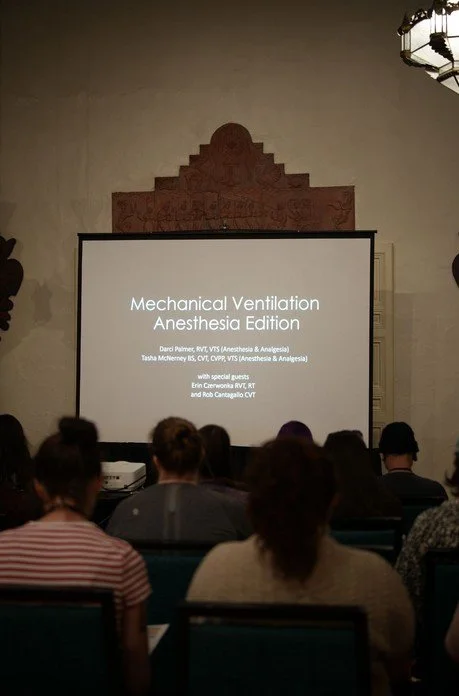
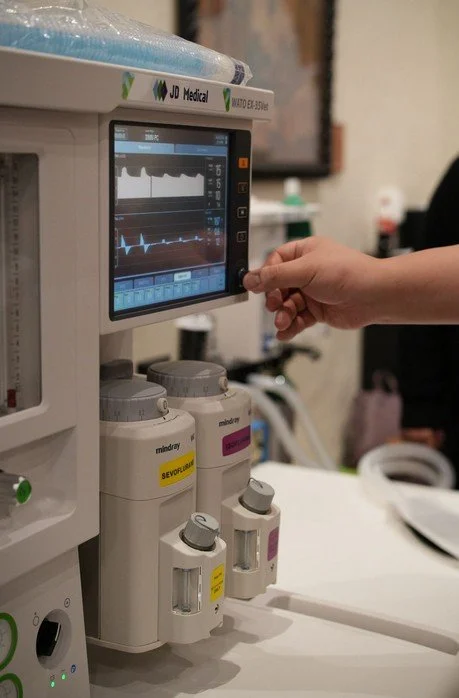

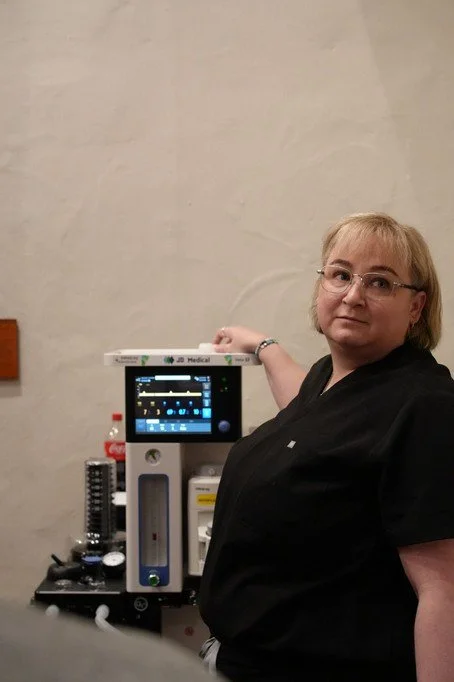
Why Do Our Patients Need Mechanical Ventilation?
Anesthetic drugs affect respiratory function. Many anesthetic agents, like propofol, some doses of Ketamine, and alfaxalone, depress the central respiratory drive, reduce functional residual capacity, impair ventilation-perfusion matching, and promote atelectasis. Additionally, positioning, obesity, thoracic disease, abdominal distension, and neuromuscular weakness can further compromise ventilation.
As a result, many anesthetized veterinary patients experience hypoventilation characterized by:
Elevated end-tidal CO₂ (ETCO₂)
Increased arterial carbon dioxide (PaCO₂)
Reduced alveolar ventilation
Increased work of breathing
Mechanical ventilation allows us to support or replace spontaneous breathing, helping maintain appropriate oxygenation and ventilation throughout anesthesia.
What is Volume Control Ventilation?
Volume Control (VC) ventilation is one of the most familiar ventilator modes in both human and veterinary medicine.
In this mode, the clinician selects a desired tidal volume, respiratory rate, inspiratory time, and other ventilatory parameters. The ventilator then delivers the programmed tidal volume with every mandatory breath regardless of the patient's respiratory effort.
The key feature of VC ventilation is consistency.
If a 20-kg dog is programmed to receive a tidal volume of 200 mL, the ventilator will attempt to deliver 200 mL with each breath regardless of changes in respiratory mechanics.
Advantages of Volume Control Ventilation
Guaranteed tidal volume delivery
The primary advantage of VC ventilation is that the target tidal volume is reliably delivered, helping ensure adequate minute ventilation.
Predictable CO₂ management
Because tidal volume and respiratory rate are controlled, clinicians can more easily manipulate minute ventilation and manage hypercapnia.
Useful for apneic patients
Patients that are heavily anesthetized, paralyzed, or unable to initiate spontaneous breaths benefit from fully controlled ventilation.
Potential Limitations
The challenge with volume control ventilation is that airway pressures may vary significantly.
If lung compliance decreases due to obesity, atelectasis, pneumoperitoneum, pulmonary disease, or patient positioning, the ventilator may need to generate higher airway pressures to achieve the desired tidal volume.
This can increase the risk of:
Barotrauma
Volutrauma
Hemodynamic compromise
Excessive alveolar distension
For this reason, monitoring peak inspiratory pressure (PIP) is critical when utilizing VC ventilation.
What is Volume Support Ventilation?
Volume Support (VS) ventilation is a more dynamic mode designed for patients capable of initiating spontaneous breaths. Like I say, if they can still drive, let them.
Unlike VC ventilation, Volume Support is a pressure-targeted mode with adaptive feedback.
You select a desired tidal volume, but instead of delivering a fixed volume breath, the ventilator continuously adjusts inspiratory pressure to achieve that volume.
The patient initiates each breath, and the ventilator provides only the pressure necessary to help the patient reach the target tidal volume.
Think of Volume Support as a mode that asks:
"How much assistance does this patient need to achieve the desired tidal volume?"
The ventilator then increases or decreases support based on the patient's respiratory effort and lung mechanics.
Advantages of Volume Support Ventilation
Encourages spontaneous breathing
Patients maintain control over respiratory timing and frequency, which can preserve more normal respiratory physiology.
Potentially lower airway pressures
Because pressure support is continuously adjusted, patients often receive the lowest effective inspiratory pressure needed to achieve the target volume.
Improved patient-ventilator synchrony
Patients tend to "fight" the ventilator less because they initiate breaths themselves.
Useful during lighter planes of anesthesia
As patients begin recovering or are maintained at lighter anesthetic depths, VS ventilation can provide support while allowing spontaneous respiratory effort.
Potential Limitations
Volume Support depends on the patient initiating breaths.
If the patient becomes deeply anesthetized or apneic, many ventilators will eventually switch to a backup mode, but support may not be immediate depending on ventilator settings.
Additionally, tidal volume delivery may become less reliable if respiratory effort changes dramatically over time.
Which Mode Should You Choose?
The answer depends largely on the patient's respiratory status and anesthetic depth.
Volume Control May Be Preferred When:
The patient is apneic
Neuromuscular blocking agents are being used
Tight control of PaCO₂ is required
The patient has severe respiratory depression
Consistent minute ventilation is desired
Volume Support May Be Preferred When:
The patient is breathing spontaneously
Anesthesia is relatively light
Assisted ventilation is desired rather than full control
The goal is to reduce work of breathing while maintaining spontaneous respiratory patterns
Monitoring Matters More Than Mode Selection
Regardless of which ventilation mode is selected, success depends on monitoring the patient's response.
Important parameters include:
End-Tidal CO₂
ETCO₂ provides real-time information regarding ventilation effectiveness.
Most anesthetized patients are maintained with ETCO₂ values between 35 and 45 mmHg, although individual patient goals may vary.
Airway Pressures
Monitor:
Peak Inspiratory Pressure (PIP)
Plateau Pressure (when available)
Mean Airway Pressure
Unexpected increases may indicate:
Reduced compliance
Airway obstruction
Endotracheal tube issues
Circuit problems
Tidal Volume
A commonly cited starting point is approximately 8–10 mL/kg, though individualized lung-protective strategies may utilize lower tidal volumes depending on the patient.
Pulse Oximetry and Oxygenation
Remember that oxygenation and ventilation are not the same thing. A patient can maintain normal SpO₂ while simultaneously retaining significant amounts of CO₂.
Blood Pressure and Cardiovascular Function
Positive pressure ventilation increases intrathoracic pressure and can reduce venous return, potentially impacting cardiac output and blood pressure.
Always evaluate ventilation within the context of the patient's overall cardiovascular status.
Volume Control and Volume Support ventilation are both valuable tools in veterinary anesthesia, but they serve different purposes.
Volume Control provides consistent, predictable ventilation and is ideal for patients requiring full respiratory support. Volume Support, on the other hand, adapts to the patient's own respiratory effort, making it an excellent option for spontaneously breathing patients that need assistance without complete ventilatory control.
Rather than viewing one mode as superior to the other, clinicians should focus on matching the ventilator mode to the patient's physiology, anesthetic depth, and clinical goals. When combined with diligent monitoring and thoughtful anesthetic management, both modes can help improve patient safety and optimize perioperative respiratory care.