Brachycephalic Peri-Anesthetic Management
If you’re anything like me, you may have noticed a big uptick in the number of French Bulldogs visiting your neuro service, or your dermatology service, or your ER! During anesthesia brachycephalic dogs and cats require specialized peri-anesthetic management because their unique airway and gastrointestinal (GI) anatomy substantially increases the risk of regurgitation, gastroesophageal reflux (GER), and aspiration pneumonia. Stenotic nares, an elongated soft palate, everted laryngeal saccules, hypoplastic trachea, and dynamic airway collapse increase inspiratory resistance, generating chronic negative intrathoracic pressures that promote GER, hiatal herniation, delayed gastric emptying, and esophagitis.
Most of the time, these patients have learned to compensate for their abnormalities, but during general anesthesia, relaxation of the lower esophageal sphincter further predisposes these patients to reflux and regurgitation, making aspiration a significant perioperative concern. Systematic reviews have demonstrated that brachycephalic dogs experience GER more frequently than mesocephalic breeds, while retrospective studies report a nearly fourfold greater risk of aspiration pneumonia in brachycephalic breeds, with pre-existing gastrointestinal disease identified as the most common contributing risk factor.
Pharmacologic strategies should focus on reducing nausea and vomiting while recognizing that prevention of vomiting does not necessarily prevent reflux. Here are some ways we can manage those risks in our brachycephalic patients: first lets look at Maropitant, a neurokinin-1 (NK1) receptor antagonist, which is widely recommended as part of the pre-anesthetic protocol because it reliably prevents opioid-induced vomiting and reduces nausea; however, studies indicate that although maropitant decreases emesis, it does not consistently prevent anesthetic-associated GER. Ondansetron and dolasetron (5-HT3 receptor antagonists) are valuable antiemetics, particularly for opioid-associated nausea, while metoclopramide may improve gastric emptying and increase lower esophageal sphincter tone in appropriately selected patients. Acid suppression with proton pump inhibitors (omeprazole or pantoprazole) or H2-receptor antagonists (famotidine) may lessen the severity of esophageal injury should reflux occur, although routine prophylactic administration remains controversial and should be guided by patient history and risk factors.
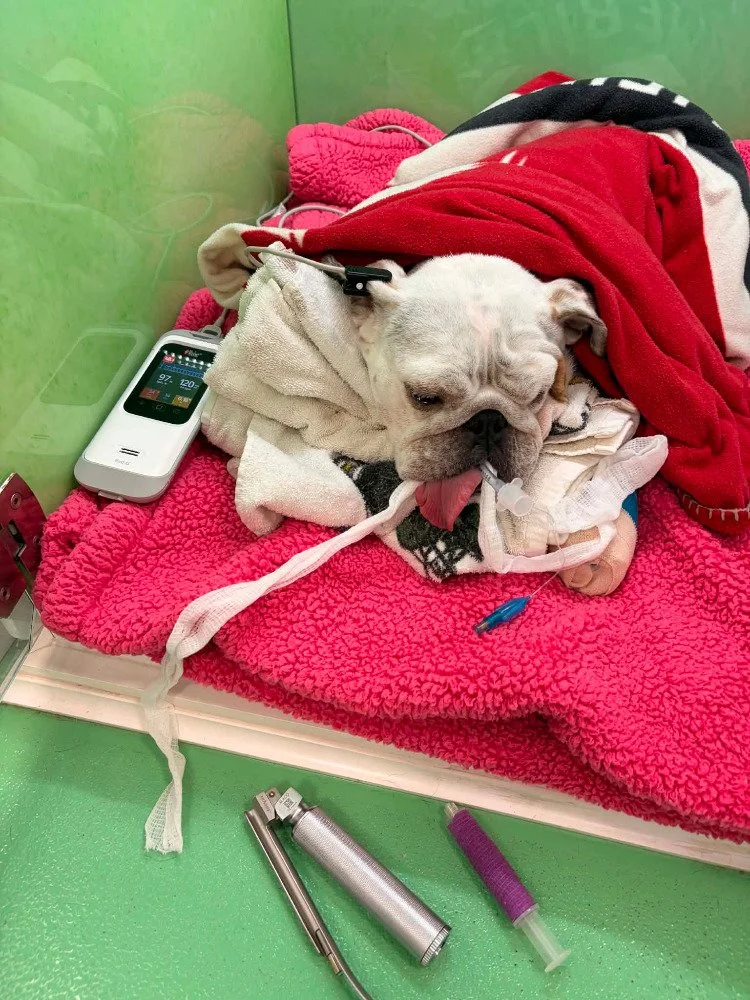
Drug therapy should be combined with meticulous anesthetic management. Appropriate fasting, preoxygenation, gentle airway handling, rapid placement of a cuffed endotracheal tube, maintenance of cuff inflation until swallowing and airway reflexes have returned, and recovery in sternal recumbency with the head elevated all reduce the likelihood of aspiration. Close postoperative monitoring is equally important, as aspiration events frequently occur during recovery rather than during anesthesia itself. A multimodal approach combining evidence-based pharmacology with thoughtful airway management offers the best opportunity to reduce perioperative morbidity in brachycephalic veterinary patients.
Recommended reading:
Polidoro G, Papageorgiou V, Sakkadaki E, Panagopoulou E. Systematic review of the prevalence of gastro-esophageal reflux in brachycephalic dogs during anaesthesia.Hellenic Journal of Companion Animal Medicine. 2020;9(1). This systematic review summarizes evidence that brachycephalic dogs have a higher incidence of anesthetic-associated gastroesophageal reflux.
Boscan P, Twedt D, Lotti F, et al. Effect of maropitant, maropitant with omeprazole and esophageal lavage on gastroesophageal reflux in anesthetized dogs.Veterinary Anaesthesia and Analgesia. 2018;45(Suppl):Abstract. Frequently cited study demonstrating that maropitant reduces vomiting but does not consistently prevent gastroesophageal reflux.
Favarato ES, Souza MV, Costa PR, et al. Evaluation of metoclopramide and ranitidine on the prevention of gastroesophageal reflux episodes in anesthetized dogs.Research in Veterinary Science. 2012;93:466-467.